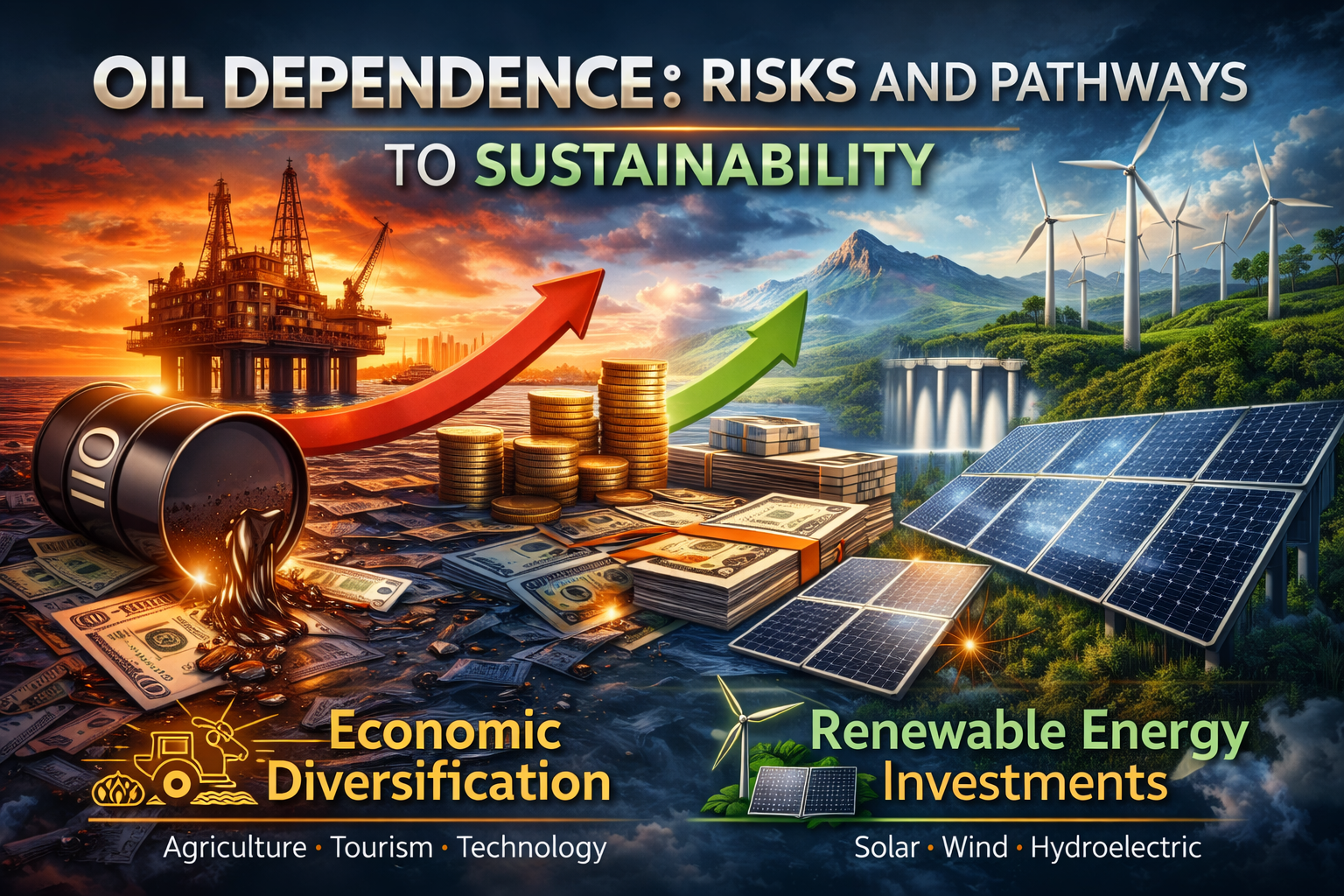
Oil Dependence and Its Risks
Dependence on oil as a primary energy source presents a range of significant risks for both global and local economies. One of the greatest dangers associated with this dependence is the volatility of oil prices, which can be influenced by a variety of geopolitical, economic, and environmental factors. When a country focuses excessively on the extraction and export of oil, its economy can become extremely vulnerable to price fluctuations. For example, crises in the Middle East or changes in OPEC policies can trigger sudden increases in the price per barrel, resulting in economic instability for countries that rely heavily on this commodity.
In addition to financial risks, oil dependence has major social implications. In countries that rely almost exclusively on oil, price uncertainty can lead to financial crises that directly affect the population’s quality of life. Employment in sectors unrelated to oil may be sporadic, and public services may face budget cuts due to declining government revenues during periods of low oil prices. The lack of economic diversification leaves these countries in a fragile position, where prosperity is directly proportional to the performance of the oil market.
Furthermore, oil dependence is not only an economic problem but also an environmental challenge. Oil exploration is frequently associated with ecological disasters and greenhouse gas emissions, intensifying the risks of climate change. Therefore, by committing to a transition toward more sustainable energy sources, countries not only mitigate economic risks but also make progress toward environmental protection and improved social well-being. It is essential that countries reassess their energy resource strategies and pursue alternatives that promote greater economic resilience and long-term sustainability.
The Urgency of Economic Diversification
Dependence on oil as the main source of revenue for many countries presents significant risks, including price volatility and political uncertainty. In this context, economic diversification stands out as a prudent and necessary strategy. Diversification not only provides economic stability but also creates opportunities for growth across multiple sectors, mitigating the negative effects of fluctuations in the oil market.
One effective path toward economic diversification is strengthening agriculture. The development of sustainable farming practices, the implementation of advanced technologies, and support for small-scale farms can transform agriculture into a key pillar of the economy. In addition, by investing in infrastructure such as roads and irrigation systems, countries can increase agricultural productivity and facilitate access to markets.
Another area with great potential is tourism. Countries that transform their natural and cultural assets into tourist attractions can find a significant source of revenue. To achieve this, it is necessary to promote tourism infrastructure, offer professional training programs in the service sector, and ensure the preservation of natural and cultural heritage.
Digital transformation and the adoption of emerging technologies also play a crucial role in economic diversification. Encouraging research and development in technology, including innovations in renewable energy, can not only reduce dependence on oil but also create new jobs and stimulate sustainable economic growth.
However, countries face significant barriers in pursuing diversification. Resistance to change, lack of resources, and the need for technical capacity are challenges that must be addressed. Therefore, an integrated approach involving all sectors of society is essential to pave the way toward a diversified and resilient economy.
Investment in Renewable Energy
The transition from an oil-dependent economy to one based on renewable energy is essential to mitigate the environmental and social risks associated with climate change and the depletion of natural resources. Renewable energy sources such as solar, wind, and hydroelectric power offer viable and sustainable alternatives to the traditional energy model, enabling the reduction of carbon emissions and promoting sustainable development.
Solar energy, which harnesses sunlight, has emerged as one of the most promising sources due to its accessibility and technological advancements in solar panel systems. This form of energy not only reduces dependence on fossil fuels but also creates jobs in the installation and maintenance of solar systems. Countries such as Germany and the United States have implemented incentive policies, including subsidies and tax incentives, to rapidly foster growth in this sector.
Wind energy is another important alternative, using turbines to convert the force of the wind into electricity. In this field, countries such as Denmark and Spain lead with robust investments in infrastructure and clean energy policies. Wind energy not only provides environmental benefits by reducing fossil fuel consumption but also strengthens local economies by creating jobs and investing in communities.
Additionally, hydroelectric power, generated by the movement of water, represents one of the oldest and most reliable forms of renewable energy. Mountainous countries such as Brazil and Norway have benefited from this source, which offers a stable energy matrix and reduces vulnerability to fluctuations in oil prices.
With the advancement of technology and the growing recognition of the importance of sustainability, investment in renewable energy is not only an environmentally responsible decision but also a smart economic strategy. Successful public policies demonstrate that dependence on oil can be mitigated through viable solutions, ensuring a more sustainable and prosperous future for coming generations.
Innovation and Inclusive Policies as Keys to Success
The energy transition is one of the most essential processes for ensuring a sustainable future, especially in a world that relies heavily on oil. In this context, technological innovation and the implementation of inclusive policies emerge as crucial elements for the success of this transition. Innovation is not limited to the development of new technologies but also includes optimizing existing processes and creating sustainable business models that can be widely replicated.
Case studies from countries that have already implemented successful initiatives show how collaboration among governments, the private sector, and local communities plays a vital role in promoting renewable energy. For example, in Denmark, the government encouraged public-private partnerships that resulted in significant investments in wind energy technologies and infrastructure. This collaborative model not only improved energy efficiency but also ensured that citizens actively participated in the development of these energy systems, promoting social acceptance that is essential for any sustainable initiative.
Moreover, inclusive policies allow the engagement of different sectors of society, especially groups that have historically been marginalized in discussions about energy. Countries such as Brazil have invested in programs that encourage public participation in energy generation, promoting not only the use of renewable sources but also social justice. These initiatives ensure that the benefits of the energy transition are distributed equitably, transforming challenges into opportunities for all citizens.